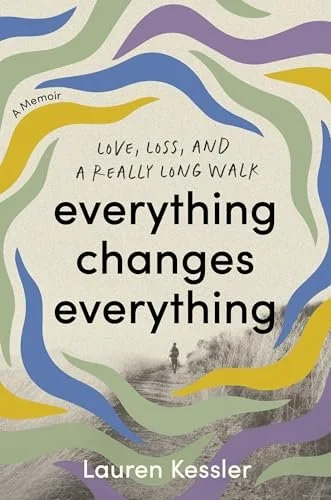
Wednesday, February 25, 7 PM; Book Release Celebration for Lauren Kessler, Author of “Everything Changes Everything: Love, Loss, and a Really Long Walk”
Meet and Greet, Book Talk, Reading, Q & A, Signing
(free)
————————————————
Description
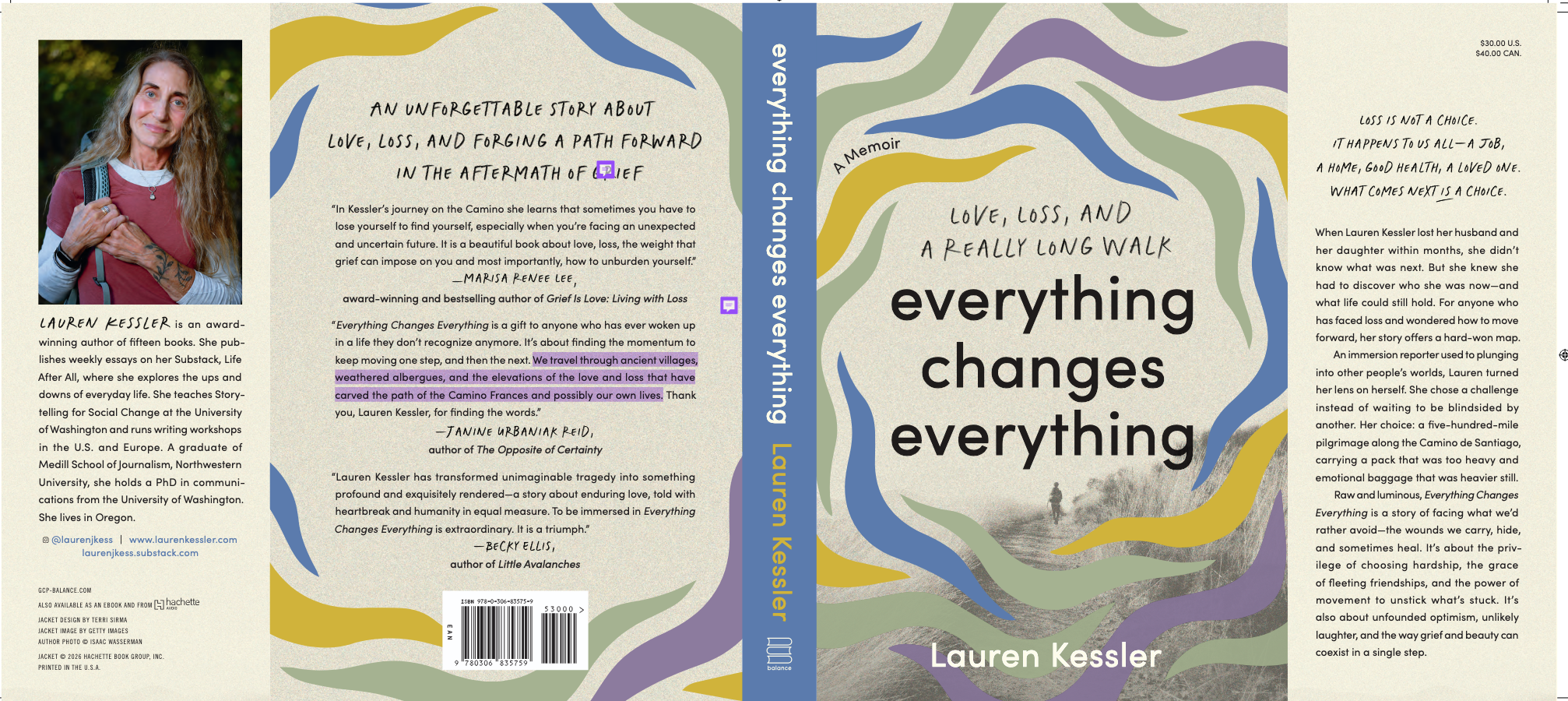
A resonant and timely story about love, loss, and forging a path forward in the aftermath of grief.
After tragedy upended the contours of her life, Lauren Kessler, an unflinching immersion journalist, felt compelled to move—to do something, to be somewhere else. So she set out alone on the famed Camino de Santiago, walking across Spain to create space between the life she’d lived and the life she hadn’t chosen but now inhabited.
Raw and luminous, Everything Changes Everything is a story about facing what we’d rather avoid, about the wounds we carry, hide, and—sometimes—heal. It’s about the privilege of choosing hardship, the grace of temporary friendship, the solace of kindred spirits, and the power of movement to unstick what’s stuck. It’s also about unfounded optimism, unlikely laughter, and the way grief and beauty can coexist in a single step.
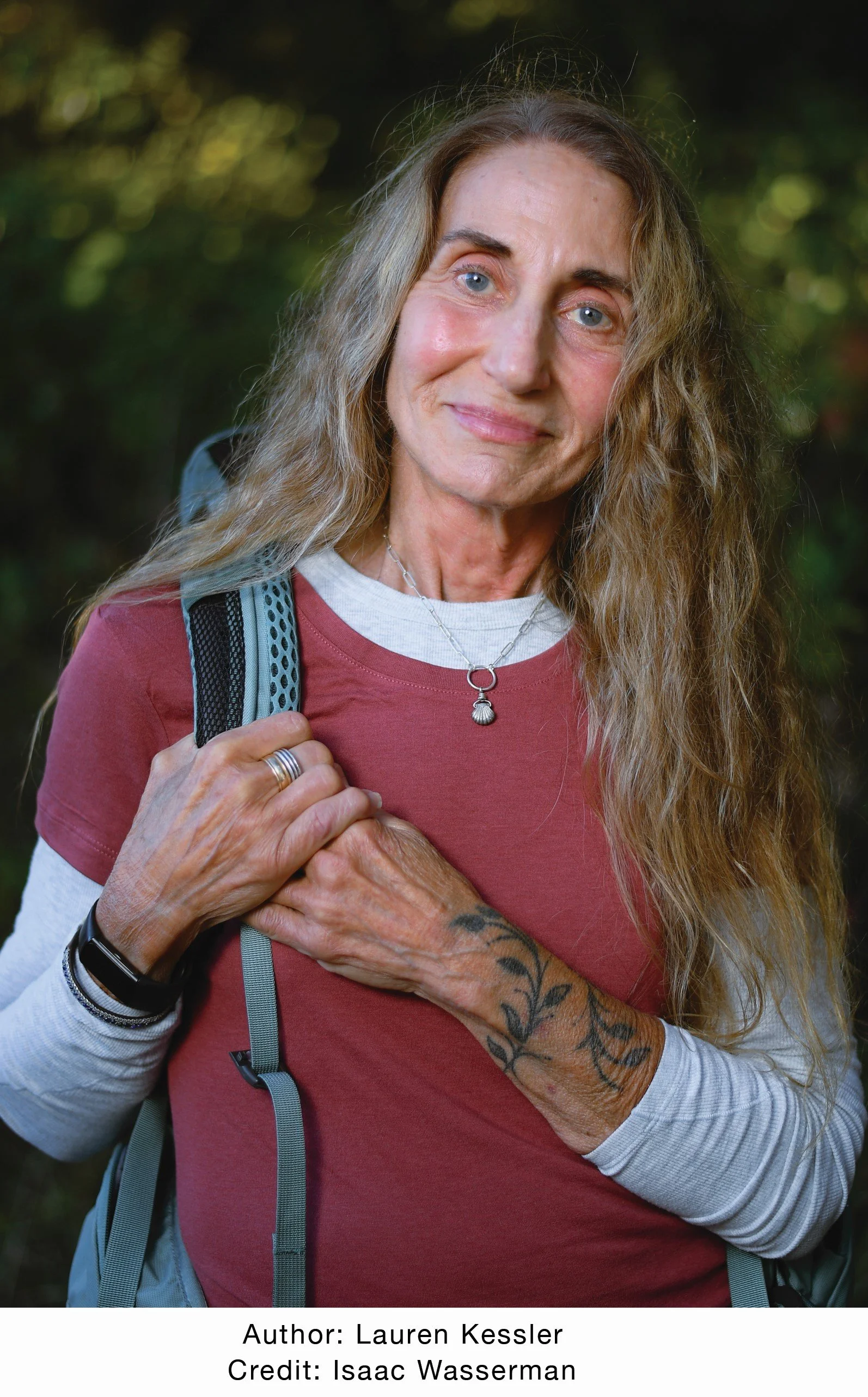
Lauren Kessler is an award-winning author and (semi) fearless immersion reporter who combines lively narrative with deep research. She is the author of 11 works of narrative nonfiction, 3 biographies, an oral history, and 4 books on writing and reporting. She teaches Storytelling for Social Change at the University of Washington and runs writing workshops for Forum for Journalism and Media in Vienna, and for newbie and veteran writers closer to home. A graduate of Medill School of Journalism, Northwestern University, she holds a Ph.D. in Communications from the University of Washington. She lives in Oregon.
Library Journal Review
Journalist Kessler (Free) recounts grieving the deaths of her husband and daughter in this moving memoir. The through line is Kessler’s journey along the Camino Francés, an ancient 500-mile pilgrimage route from Spain to France, which she took out of a need to “do something to separate the life I’d been living from the life that is now in front of me.” As Kessler details her trek, she shuffles in flashbacks about her personal losses, beginning with her husband, Tom, who died by assisted suicide after being diagnosed with an incurable cancer. As Kessler was mourning him, her daughter, Lizzie, died from a drug overdose. The narrative structure allows Kessler to build tension as she alternates between the pilgrimage and her family tragedies, with vivid sketches of her loved ones (Lizzie, in life, would “set herself on fire to keep someone else warm”) bumping against descriptions of verdant valleys, sleepy villages, 500-year-old stone houses, and more. Kessler is candid about her bitterness and impatience after Lizzie’s death, when she lashed out at acquaintances who offered her platitudes, but she also makes room for beauty, describing how she came to accept grief as “a new organ that has taken up residence in my body.” This leaves a mark.